Cycling is rarely just about getting somewhere. Across the world, the bicycle has taken on different meanings. In Amsterdam, it is part of the rhythm of everyday life. In France and Italy, it carries the history and spectacle of racing. In cities like New York City and Philadelphia, it has become transportation, recreation, community, and a form of self-expression. Somewhere between the peloton and the city street, cycling became fashionable.
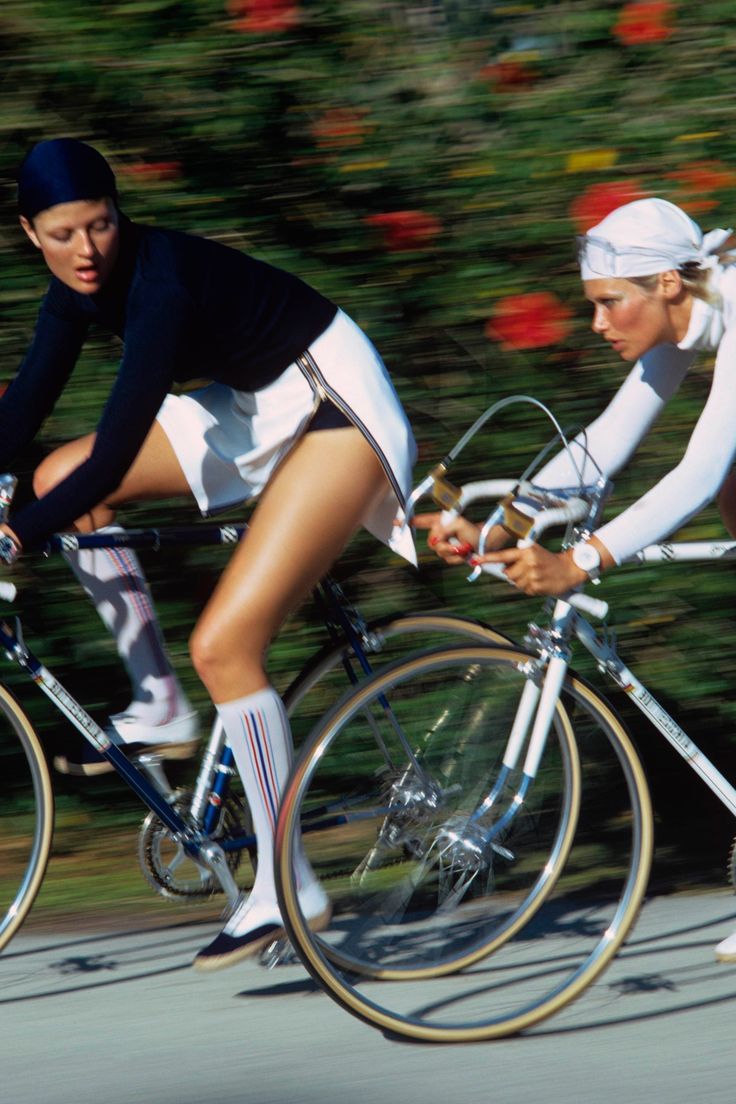
Cycling in style. Photo via Pinterest.
The Start Line
The bicycle has been around for centuries, but modern cycling began taking shape in the 19th century as bicycles became faster, lighter, and more accessible.
What began as a new form of transportation quickly became a sport. Races emerged across Europe, cycling clubs formed, and the bicycle became associated with independence and movement. By the early 20th century, cycling had developed into both a competitive sport and a cultural practice. The history of the bicycle is therefore also a history of how people move as means of transportation, exercise, and leisure.

18th century bicycle. Photo via Getty Images.
Racing Through Europe
Europe ultimately built much of cycling's mythology. The Tour de France, Giro d'Italia, and other major races transformed cycling into spectacle, turning roads through France, Italy, and beyond into temporary stadiums. The peloton became recognizable from miles away: coordinated jerseys, helmets, sunglasses, and bikes moving as one.
But European cycling culture exists beyond professional racing. In Amsterdam, Copenhagen, and other cycling cities, the bicycle is woven into everyday life. You don't need a race, a uniform, or a training plan. Sometimes, the bike is simply how you go from A to B.

Tour de France, 2018. Photo via Pinterest.
The American Ride
American cycling culture has always been distinct. In cities like New York City and Philadelphia, bikes have become part of urban transportation, recreation, and community. Cycling groups have created spaces around the ride itself, bringing together people who may have little in common beyond the streets they share.
Black cycling culture has also played its role in reshaping who is seen on two wheels. From Marshall “Major” Taylor, the Indianapolis-born Black cycling champion, to contemporary Black-led cycling clubs and communities, the history of American cycling extends far beyond the traditional image of the European road racer.
Here, the bicycle can mean freedom, fitness, transportation, community, or simply a different way to experience the city.

NYC Go Ride, Nigel x HBX celebrate World Bicycle Day, 2023. Photo via Hypebeast.
Riding in Style
Because of its growing popularity in urban cities, cycling quickly tied knots with fashion. What was once purely functional became part of the look, bringing performance, utility, and personal style onto the streets.
The cyclist became part of the urban landscape. Technical fabrics, fitted jerseys, sunglasses, helmets, and cycling caps began appearing alongside everyday pieces. The boundaries between what was meant for the bike and what was meant for the street became less defined.
Brands like le FLEUR*, Palace, and Louis Vuitton borrowed its streamlined silhouettes, technical materials, and utilitarian details. The result is a wardrobe that does not always distinguish between dressing to ride and dressing to live.

le FLEUR * Sunseeker. Photo via le FLEUR*.
The Walk Forward
The bicycle has always been more than a machine.
It can be transportation in Amsterdam, competition in France, community in Philadelphia, or a Saturday ride through New York City. It can be a source of freedom, a form of exercise, or simply another way to see the city.
And now, it has become part of the way we dress. Cycling sits somewhere between sport and lifestyle, performance and fashion, function and expression.
Maybe the future of cycling isn't about looking like a cyclist, it's about making the ride your own.