Sunglasses have never just been about blocking light. They sit at the intersection of concealment and projection, privacy and performance. Unlike most accessories, they speak for the face before it is read, creating distance before recognition. Because of that, they've always carried weight beyond function. What we place over the eyes reflects what a culture wants to hide, reveal, or control. Sunglasses evolve with shifting ideas of identity, status, and visibility. They reveal as much about power as they do about style. Where eyewear once signaled protection, it now signals presence.
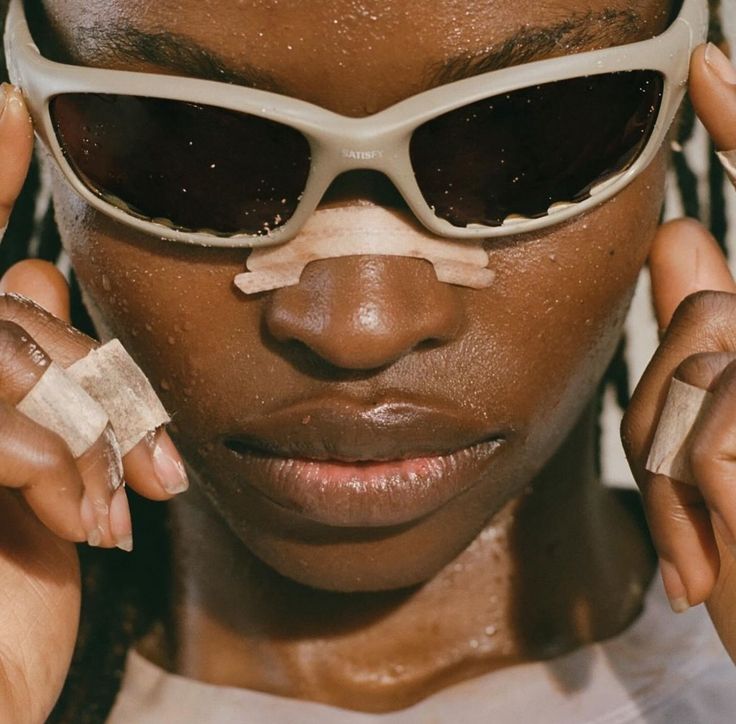
Oakley x Satisfy Straight. Photo via Pinterest.
The Origins of Concealment
Thousands of years ago, Inuit communities carved narrow slits into pieces of ivory, bone, and driftwood to reduce the blinding reflection of sunlight on snow. These early goggles filtered light without glass or lenses, allowing hunters to navigate. Their purpose was not style but endurance.
Across cultures, eyewear emerged with remarkably similar intentions. Whether shielding vision from nature or shielding expression from other people, covering the eyes was never simply practical. It became a way of controlling perception.
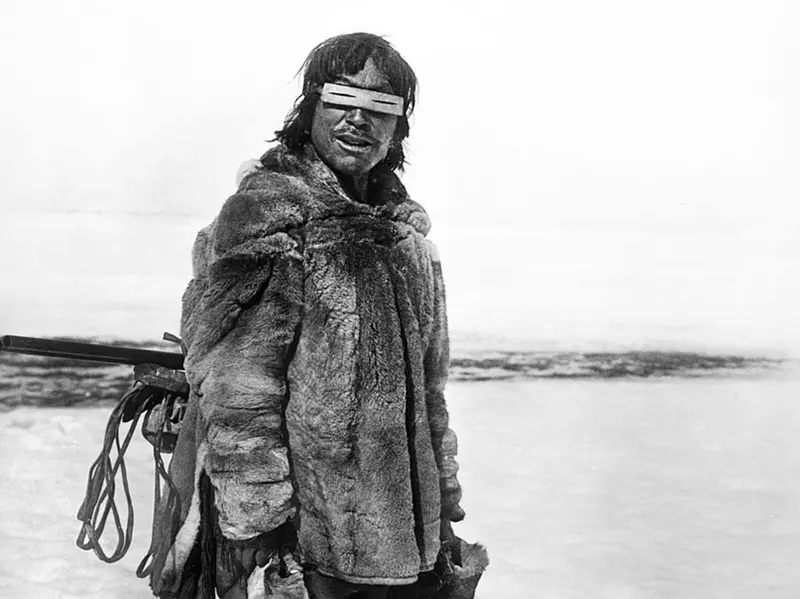
Inuit snow goggles. Photo via Rare Historical Photos.
The Modern Lens
Modern sunglasses arrived in the early twentieth century, when function met industrial design. In 1929, Sam Foster introduced the first mass-produced sunglasses to American consumers, transforming protective eyewear into an everyday product. Just a few years later, Bausch & Lomb developed aviator sunglasses for military pilots, creating a silhouette that would become one of fashion's most enduring designs.
The aviator was engineered for performance, its teardrop lens maximized protection while maintaining visibility at high altitude. As competitive sport expanded throughout the twentieth century, eyewear evolved alongside it. Cyclists, skiers, sailors, runners, baseball players, and golfers demanded precision in changing light conditions. Across every discipline, vision became another piece of equipment.
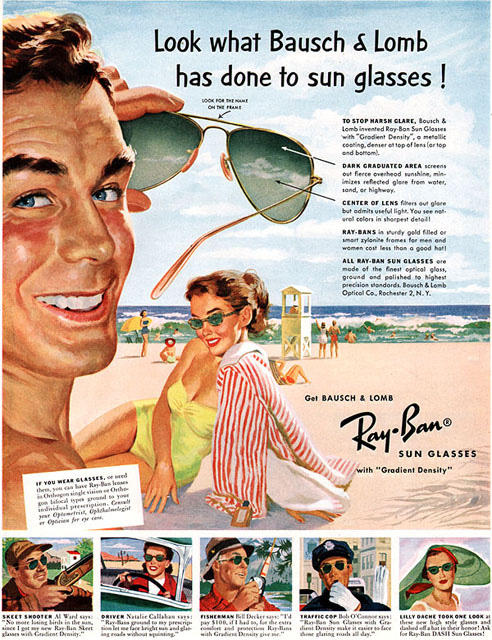
Bausch & Lomb Ray-Ban advertisement. Photo via Pinterest.
Icon Formation
Once sunglasses left utility, they entered image culture. Hollywood accelerated the shift. The face became something to edit rather than reveal. Eyes disappeared behind tinted lenses, and what remained was posture, silhouette, and attitude.
Frames like the aviator and wayfarer became constants, no longer associated with occupation but with character. Hollywood stars, musicians, and athletes all adopted the language of concealed expression. The less the public could read, the more compelling the image became.
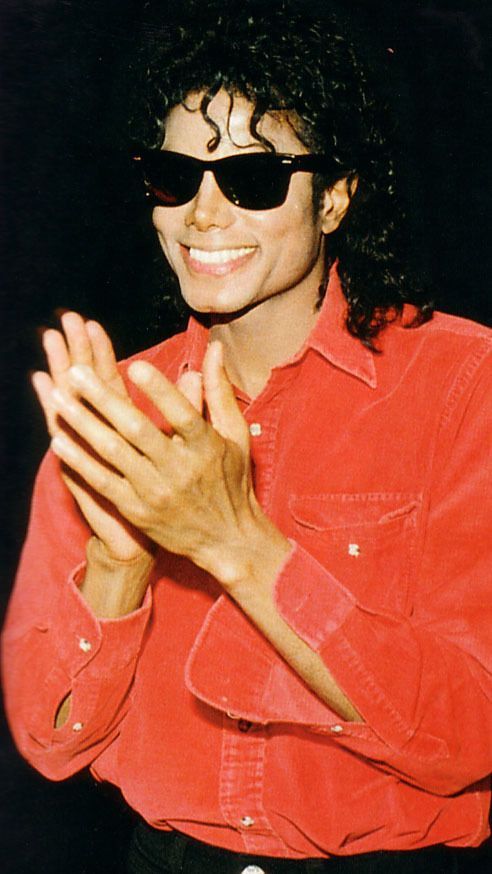
Michael Jackson, 1980s. Ray-Ban Wayfarers. Photo via Pinterest.
The Persona Layer
As celebrity culture expanded through the 2000s and 2010s, sunglasses became inseparable from controlled visibility. They weren't simply worn, they were deployed. Every airport arrival, front-row appearance, and paparazzi photograph became mediated through opacity.
Figures like A$AP Rocky transformed eyewear into stylistic language rather than accessory. Sunglasses moved fluidly between luxury fashion, streetwear, and editorial imagery, becoming part of a carefully curated identity. The frames no longer completed an outfit; they defined the relationship between person and persona.
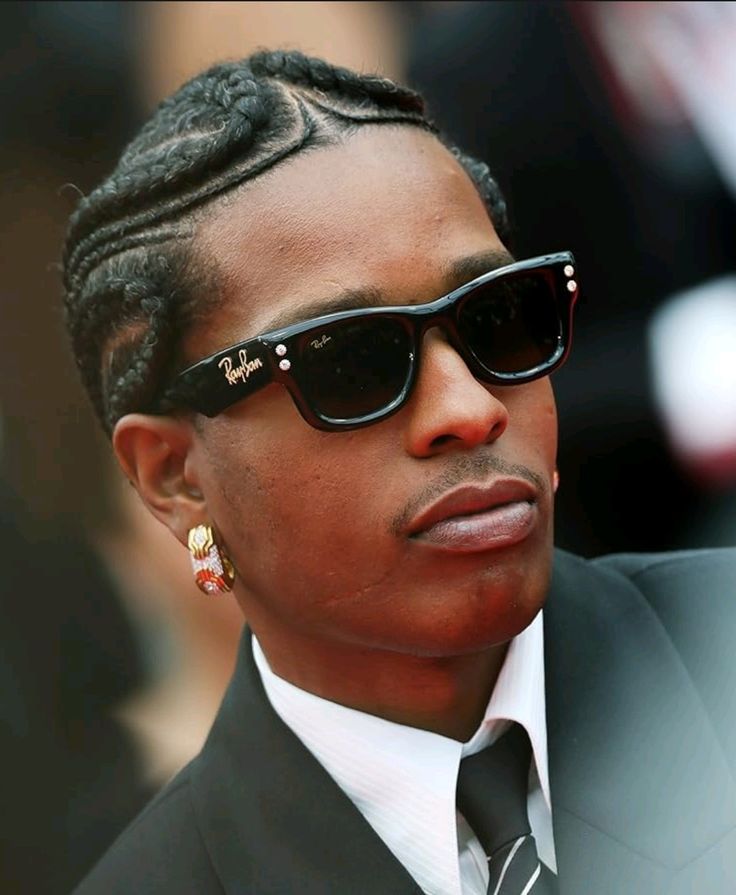
A$AP Rocky in AWGE Ray-Bans. Photo via Vittorio Zunino Celotto/Getty Images.
Luxury Interpretation
Luxury brands understand this history. Houses like Prada, Balenciaga, Gucci, and Saint Laurent aren't simply designing sunglasses; they're reinterpreting objects originally built for performance.
Many contemporary runway silhouettes borrow directly from cycling shields, ski goggles, racing visors, and wraparound performance frames. What once improved aerodynamics now shapes proportion. What once reduced glare now creates drama.
Luxury continually returns to sport because sport solves problems first. Fashion then transforms those solutions into symbols.
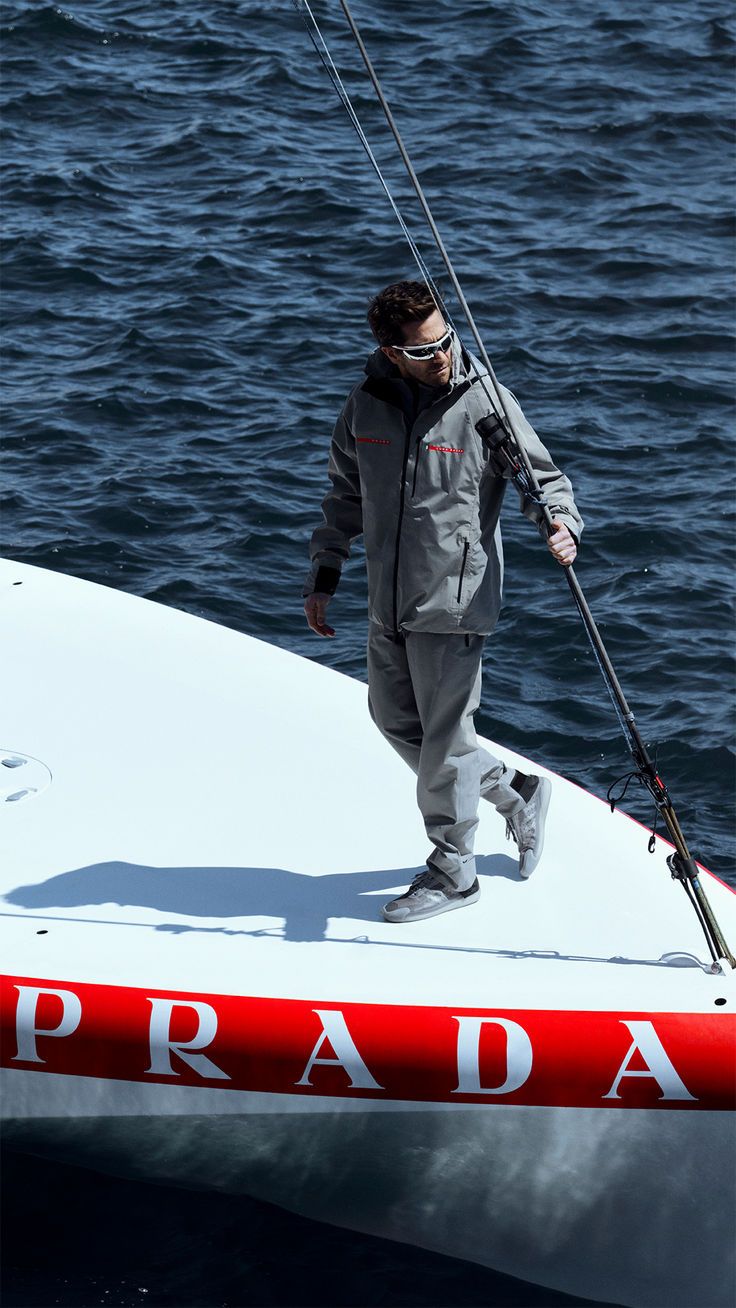
Prada Eyewear Campaign. Photo via Prada.
The Algorithmic Frame
Today, sunglasses exist within a broader visual system where identity is constantly captured, filtered, and redistributed. Technology companies have begun treating eyewear as the next personal device. Cameras, speakers, and AI are quietly integrated into classic silhouettes, blurring the boundary between fashion object and technological platform.
The Walk Forward
Sunglasses have moved far beyond protection. They now operate across sport, fashion, celebrity, and technology as systems of visibility. What began as equipment for survival and performance has become one of the most recognizable symbols of identity itself.
To look at sunglasses today is to see how sport repeatedly shapes culture long before fashion gives it a name.
Whether on a starting line, a runway, or behind an augmented lens, the question remains the same: Who gets to decide what the face reveals?