Flip flops are often dismissed as the simplest form of footwear. A rubber sole, a thin strap, a sound that follows every step. They are associated with vacations, beaches, and moments outside of strict routine. The flip flop exists between comfort and expression; it belongs equally to the shoreline and the street, the everyday, and the ironically intentional. What began as practical footwear adapted for Brazil’s beaches became a global symbol of leisure, simplicity, and effortless style.
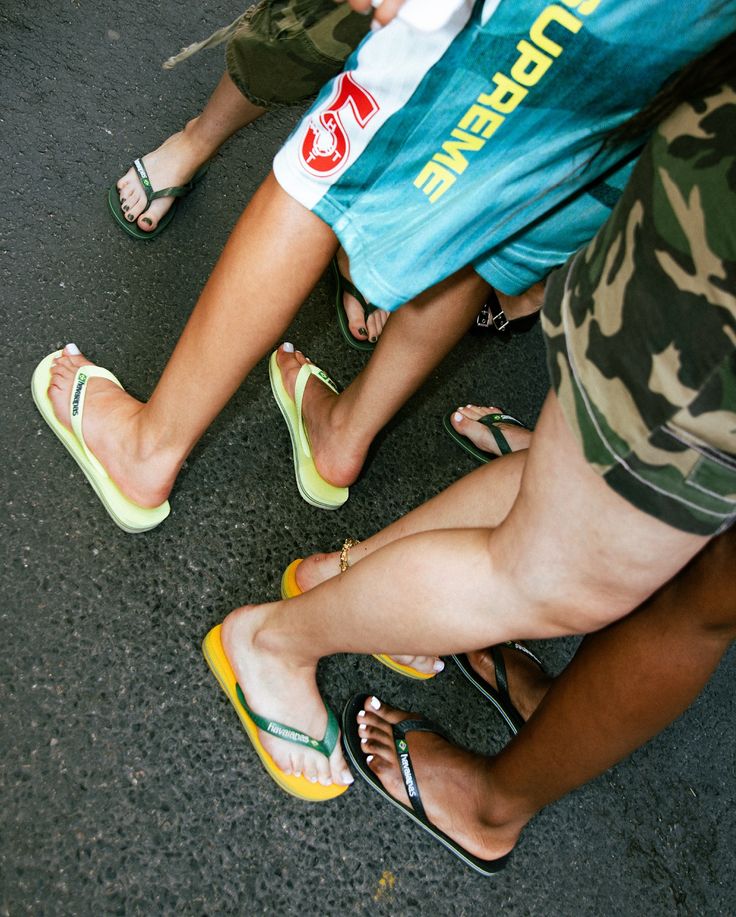
Flip Flops. Photo via Havaianas.
The Origins of Simplicity
The history of the flip flop spans thousands of years. Ancient civilizations across Egypt, Greece, Rome, and Asia developed forms of open sandals designed around climate, movement, and accessibility.
The earliest versions prioritized protection from heat and terrain rather than simple visual identity. The flip flop’s greatest strength was never complexity; it was its ability to adapt.

New Kingdom sandals. Photo via the Metropolitan Museum of Art.
Brazil’s Translation
In 1962, Brazil transformed this simple flip flop into a cultural icon with the creation of Havaianas. Inspired by traditional Japanese zōri sandals, Havaianas introduced a rubber version designed for Brazilian consumers. The name itself references ideas of sunshine, travel, and coastal living.
Originally marketed as an affordable everyday flip flop, Havaianas became deeply connected to Brazilian identity. They appeared everywhere: on beaches, in neighborhoods, and throughout daily life. Their simplicity reflected a Brazilian approach to style rooted in comfort, movement, and confidence rather than formality.
However, the flip flop was not designed to impress. It became iconic because it represented a way of living, and now lives as a global phenomenon.

Havaianas flip flops, Brazil. Photo via Havaianas.
From Beachwear to Culture
For decades, flip flops existed in a space separate from fashion. They represented downtime, something worn after work, after sport, and while escaping routine. Their association with leisure made them feel almost anti-fashion.
But culture began shifting, and every summer the flip flop makes its way back into the rotation. As streetwear blurred the boundaries between luxury and everyday clothing, comfort became a central part of contemporary style. Sneakers moved from athletic performance into luxury collections, sweatpants became wardrobe essentials, and casual footwear gained new meaning, the flip flop followed the same path.
Streetwear brands like Patta took their own spin on classic models. And what was once considered too relaxed became a statement of confidence.

Patta x Havaianas. Photo via Patta.
Luxury’s Embrace
Luxury fashion has always been drawn to ordinary objects. The most influential designs often begin with utility before becoming symbols of taste. Sneakers, work jackets, and baseball caps all followed this trajectory. The flip flop was simply next.
As fashion shifted toward understated luxury and quiet confidence, designers stopped treating the flip flop as beachwear and began presenting it as a complete styling piece. Houses like Chanel, The Row, Miu Miu, and Toteme introduced elevated interpretations through leather construction, refined proportions, and minimalist design. Rather than reinventing the silhouette, they refined it.

Chanel Lambskin Flip Flops. Photo via Pinterest.
The Walk Forward
The flip flop has traveled far beyond its simple construction. From ancient sandals to Brazilian beaches, from Havaianas to luxury runways, it has quietly evolved alongside changing ideas of comfort, identity, and style.
Its influence comes from what it refuses to be. It doesn't rely on innovation, performance, or excess. Instead, it represents something increasingly valuable in contemporary fashion: ease.
The most enduring pieces are rarely the most complicated; they become icons because they fit naturally into everyday life while continuously adapting to the culture around them.