The US Open has become more than a tennis tournament. For two weeks in New York, the grounds of the Billie Jean King National Tennis Center become their own kind of runway, bringing together sport, fashion, celebrity, and the particular energy of late summer in the city. Despite the increasingly bold fashion statements associated with sporting events, the style at this year's US Open feels surprisingly grounded. The dominant look is sporty chic: tennis skirts and dresses, crisp polos, white sneakers, oversized sunglasses, and elevated activewear. Some outfits look ready for the court, while others simply borrow its language. The new goal is not to look like you play tennis; it’s to look like you could.
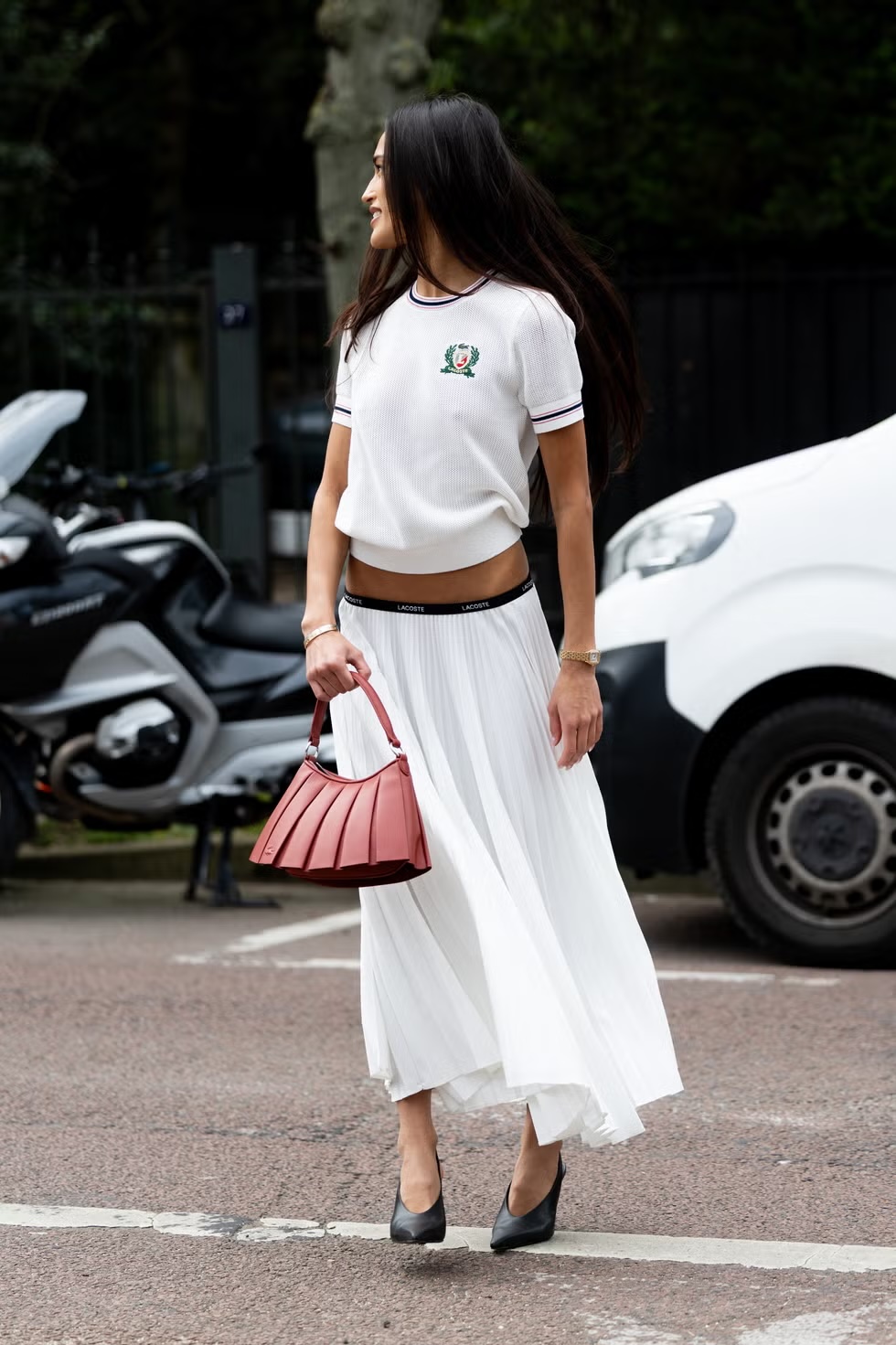
Sporty Chic, US Open 2026. Photo via Valentina Frugiuele / Getty Images.
The New Courtside Uniform
The tennis skirt may be the most recognizable piece of the US Open wardrobe, but its role has expanded far beyond the court. Pleated skirts, athletic dresses, polos, and sneakers have become staples of the courtside uniform, whether they were originally designed for tennis or simply inspired by it.
What makes this style interesting is the space between sportswear and fashion. Some spectators wear traditional athletic brands, while others choose luxury pieces that borrow directly from tennis's visual language. A skirt may have the silhouette of a tennis skirt without ever being intended for the court. The result is a new kind of uniform: recognizable, comfortable, and effortlessly put together.
Comfort Is the New Dress Code
Over the past year, athleisure has once again taken over the fashion world. People are increasingly opting for comfort over overly complicated outfits, while still searching for a middle ground between performance and personal style.
With a growing number of athleisure brands entering the market, it raises an interesting question: is comfort the new luxury? At the US Open, the answer seems to be yes. Lululemon, Alo, and other activewear brands fit naturally alongside Lacoste, Ralph Lauren, and more elevated designer pieces. White sneakers have become essential, while breathable fabrics, relaxed silhouettes, and practical accessories make it possible to spend an entire day moving between courts.
The new luxury is not necessarily about wearing the most expensive outfit. It is about wearing something that looks good and still works with your life.

Alo Yoga tennis outfit. Photo via Pinterest.
Tennis Style Beyond the Court
Tennis has always had a distinct visual identity. The crisp whites, pleated skirts, polos, and classic sneakers associated with the sport have existed for decades, but they are now appearing in fashion far beyond the court.
Brands have embraced tennis as an aesthetic rather than simply a sport. The country-club references, athletic silhouettes, and clean color palettes have become part of everyday wardrobes, especially as fashion continues to look toward sport for inspiration.
Today, these same references are being reinterpreted by luxury houses, independent designers, and activewear brands. Tennis style has become less about following the rules of the sport and more about borrowing its attitude.

Adidas editorial. Photo via Emily White.
Did the Players Start the Trend?
We know the players who shook tennis fashion at its core. Serena Williams challenged expectations around what women could wear on the court, while Naomi Osaka brought a new level of fashion, individuality, and cultural expression to the sport.
For years, athletes have been shaping the relationship between performance and personal style. Their clothing became part of the conversation surrounding the game itself. But the question remains: did the players influence non-players to start dressing like them?
As tennis became increasingly connected to fashion and popular culture, the style of the athletes began moving beyond the court. People did not necessarily begin dressing this way because they started playing tennis; they began dressing this way because tennis became stylish.

Naomi Osaka in custom Kid Super. Photo via Getty Images.
The Walk Forward
What is happening at the US Open reflects a larger shift happening across fashion.
The most interesting outfits are not necessarily the loudest or the most complicated. Instead, they balance comfort, function, and style. Sport continues to influence fashion, but the relationship has become increasingly seamless.
A tennis skirt does not need to be worn for tennis. A performance sneaker does not need a workout. A polo does not need a country club. At the US Open, fashion exists somewhere between the court and everyday life.
And perhaps that is why sporty chic feels so relevant right now. People are no longer willing to choose between being comfortable and being stylish, they expect to be both.