Sailing has never just been about the water. It exists somewhere between sport, transportation, leisure, and social status, carrying with it a culture that has evolved far beyond the deck. What began as a necessity became competition, competition became tradition, tradition became lifestyle, and eventually that lifestyle became fashion. Few sports have maintained such a distinct visual identity. Striped shirts, cable knits, canvas shorts, boat shoes, sailing jackets, and nautical colors all convey a connection to the coast before the wearer ever steps onto a boat. Sailing has created its own language of dress, one built around function but sustained by image.
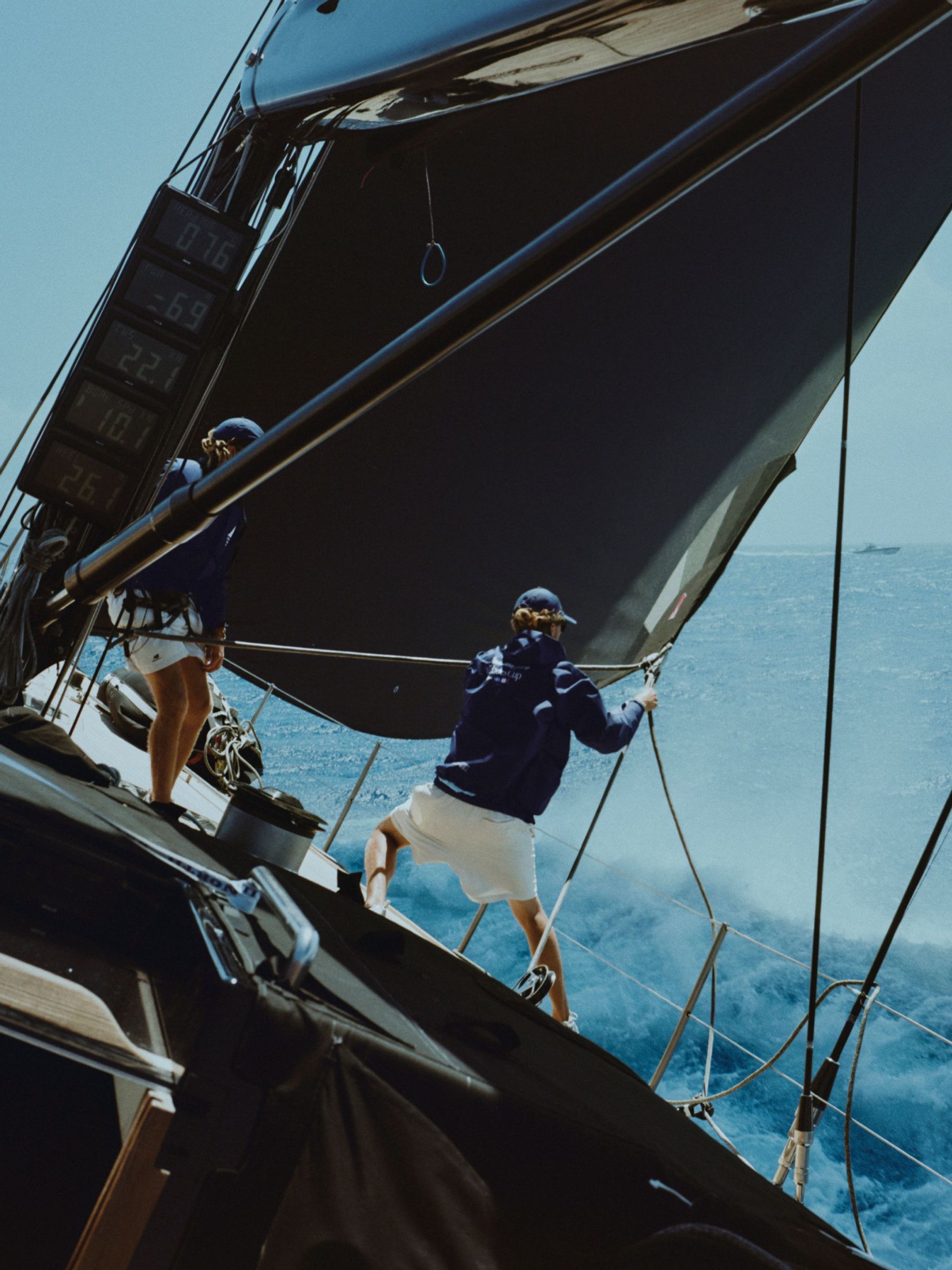
Aimé Leon Dore Cyclades Cup, Antiparos, Greece. Photo via Aimé Leon Dore.
The Origins of Sailing Culture
Long before sailing became a leisure activity, it was a means of survival. These boats connected civilizations through trade, migration, and exploration. The ability to navigate water determined where people could travel, what they could exchange, and how societies developed.
As sailing became organized into a competitive sport, a new culture formed around it. Clubs, uniforms, and traditions transformed sailing from necessity into community and soon a luxury. By the nineteenth and twentieth centuries, sailing had become increasingly associated with leisure and social class, particularly in Europe and the United States.
The sport developed its own visual codes along the way. Clothing needed to withstand wind, water, and movement, but it also began communicating belonging. What was worn on the boat became part of the identity of the people around it.

Seventeen Magazine Editorial, June 1968. Photo via Ray Kellman.
The Uniform
Sailing's influence on fashion began with the clothes that actually belonged on the water. Heavy knit sweaters provided warmth, and canvas protected against the elements. Rubber-soled shoes created traction on wet decks, and the stripes offered visibility. Windbreakers and technical layers protected sailors from changing conditions.
None of these pieces were originally designed as fashion statements, but their appeal came from necessity. Eventually, the practicality became the aesthetic. The same garments designed for performance began appearing on streets, campuses, and in luxury collections. Sailing created a uniform that could communicate leisure without appearing overly constructed.
From Yacht Club to Luxury
The visual language of sailing became powerful because it represented more than the sport itself. Navy and white suggested the sea. Stripes suggested movement. Knitwear suggested cool mornings along the coast. Boat shoes suggested access to a world that existed beyond the shoreline. The image of sailing became an image of escape.
By the late twentieth century, these references had moved firmly into mainstream fashion. Brands borrowed from the vocabulary of the yacht club, while designers reinterpreted traditional sailing garments through new proportions, fabrics, and silhouettes. The influence extended beyond clothing, becoming part of a larger lifestyle aesthetic built around travel, leisure, sport, and understated luxury.
Fashion repeatedly returns to this idea of the coast as distance from the city and sailing as movement without urgency. What made these references popular was not simply their aesthetic appeal, but the context behind them. Sailing offered fashion something trends could not easily manufacture: it was a world, a culture, and a sense of escape from the pavement.

Simon Miller Poplin. Photo via Pinterest.
Aimé Leon Dore
Aimé Leon Dore has increasingly blurred the line between fashion and the environments that inspire it. Its recent Cyclades Cup campaign places the brand directly within the world of Mediterranean sailing, using the sport, coastline, and community surrounding it as more than a backdrop.
Rather than simply dressing models in nautical pieces, the campaign captured the authentic lifestyle surrounding the sport. The clothing feels integrated into the environment; it’s casual, functional, and distinctly coastal. It’s Aimé Leon Dore.
However, this campaign is a continuation of Aimé Leon Dore’s larger approach to fashion: building a world around the product rather than presenting the product alone. Here, that world happens to be on the water.

Aimé Leon Dore Cyclades Cup, Antiparos, Greece. Photo via Aimé Leon Dore.
The Walk Forward
For decades, designers borrowed the visual language of sailing without necessarily engaging with its culture. Now, brands are moving closer to the source. They are attending, collaborating, entering environments, and building worlds around the sport.
Sailing has always represented movement, exploration, and escape. Fashion has simply found new ways to translate those ideas onto land. The future of sailing style may not belong exclusively to the yacht club anymore. It exists on the street, in the studio, and along the Mediterranean coast.
The water was always the starting point. fashion is just learning how to follow it.