Headphones were designed to be heard. Somewhere along the way, they became something to be seen in. For athletes, the journey from locker room to court, tunnel to field, and airport to arena has become its own visual language. Headphones sit somewhere between equipment and accessory, offering focus while quietly communicating something about the person wearing them. What began as a way to block out the world became part of the uniform.
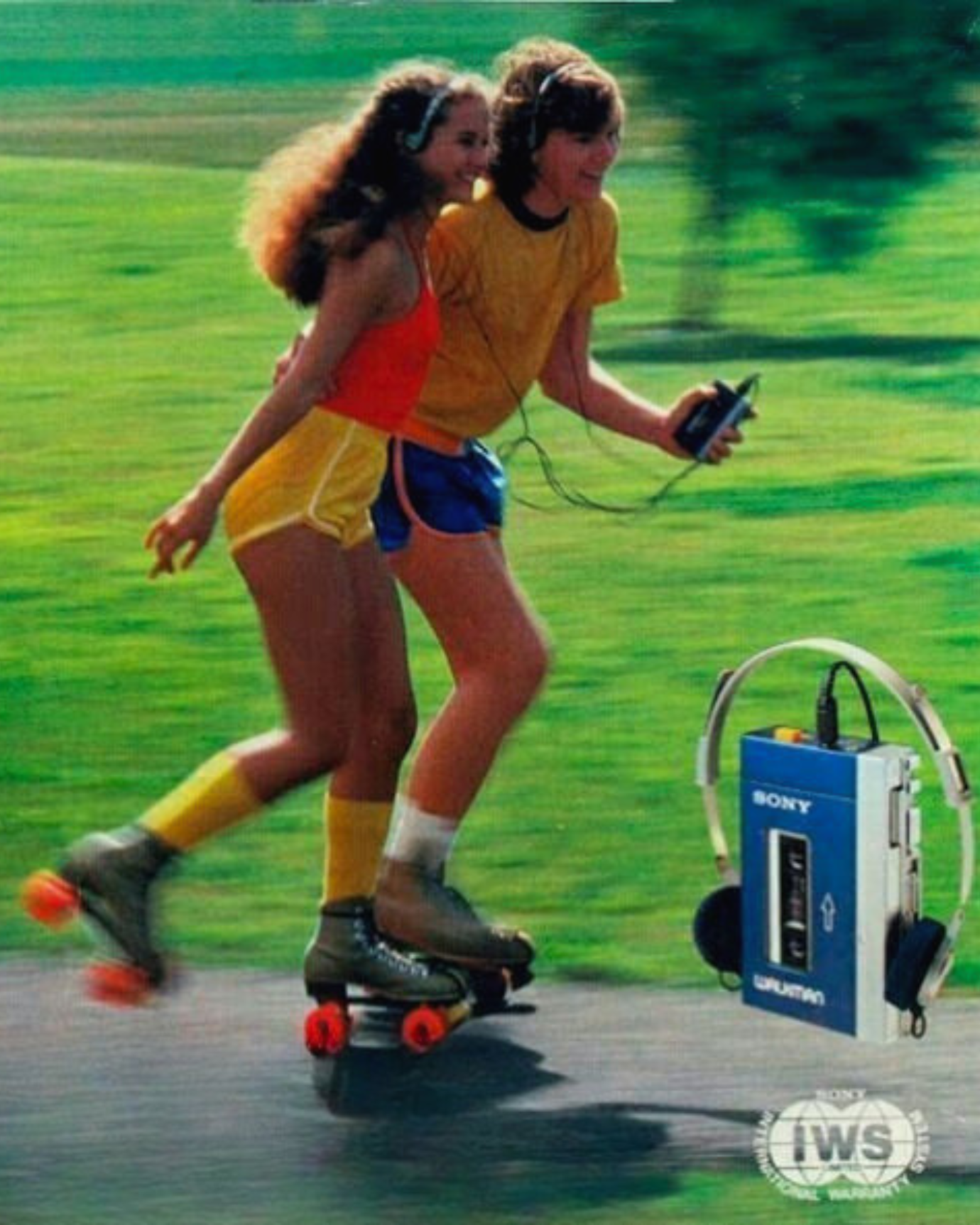
Sony Walkman advertisement. Photo via Pinterest.
The Origin
The story begins in 1979, when Sony introduced the Walkman and made music truly portable. Philips and other brands soon followed, turning headphones into a way to carry a private soundtrack wherever you went.
For athletes, that privacy became part of preparation. Headphones offered a way to tune out crowds, reporters, and expectations before competition. Over time, they moved from functional technology to something visible, worn as much as used.

Nike Philips MP3Run. Photo via Pinterest.
Beats
Founded by Dr. Dre and Jimmy Iovine, Beats entered the market in 2008 with a product that deliberately looked different from the understated headphones that came before it. The large silhouette and recognizable logo made the headphones visible even from a distance. Beats did more than sell headphones; it understood that the person wearing them could become part of the product.
Then came the athletes that helped establish headphones as an accessory associated with performance, celebrity, and identity. By 2018, Beats had formalized its relationship with basketball through a partnership with the NBA, WNBA, NBA G League, and USA Basketball.
The strategy worked because Beats wasn't asking athletes to become musicians. It was asking audiences to see athletes as people with lives, rituals, and identities outside the game.
Smaller, Wireless, Everywhere
The headphone eventually became smaller, quieter, and harder to notice. But its role in everyday style only grew.
The introduction of wireless earbuds changed the way we interacted with the accessory. There was no longer a large silhouette framing the face or a cord interrupting an outfit. Instead, listening became almost invisible, something that could happen while walking to class, running errands, working out, or arriving at the arena.
AirPods, in particular, transformed the headphone from a statement piece into an everyday uniform. The technology became less noticeable, but the ritual remained.

Anthony Edwards, Bose Ultra Open Earbuds. Photo via Bose.
Wired Again
And now, somehow, we're going back. Wired headphones have returned to the conversation, appearing not because they are technologically superior, but because they look different. The cord that once represented outdated technology now adds something to an outfit: a little mess, and a little nostalgia.
They are also cheaper, lower-risk, and easier to replace. But their appeal goes beyond price, the wire becomes part of the styling itself, layered with jackets, bags, scarves, jewelry, and other details.
In a fashion landscape increasingly shaped by nostalgia, wired headphones feel less like a step backward and more like another way of making something ordinary feel intentional.

Wired EarPods on the g. Photo via Pinterest.
The Walk Forward
Headphones have followed the same path as so many objects that move between sport and fashion. First, they served a purpose. Then, people began to notice them. Eventually, they became part of the look.
From oversized headphones in the athlete tunnel to hidden earbuds on the morning commute, and now back to the visible wire running down a jacket, the headphone has continued to change with the way we dress.
Maybe that's what makes it interesting; fashion rarely moves in a straight line. Sometimes, the way forward looks a lot like going back.